Sora: New OpenAI Text to Video Technology

Introduction to Sora: A Leap in AI-Driven Visual Arts

OpenAI has recently unveiled its pioneering text-to-video technology, Sora, marking a significant milestone in the fusion of artificial intelligence with the realm of visual creativity. This innovative technology is celebrated for its ability to generate characters and scenes that are rich in emotion, seamlessly narrating stories across successive frames. Despite its prowess in creating complex visual narratives, Sora faces challenges in accurately simulating physics and maintaining spatial consistency over time.

The Synergy of ChatGPT and DALL·E 3

At the heart of Sora lies the integration of OpenAI’s advanced language model, ChatGPT, and the imaginative power of DALL·E 3. This combination not only adheres to OpenAI’s rigorous guidelines but also ensures the technology’s application remains ethical and constructive. The collaboration between these two technologies exemplifies OpenAI’s commitment to leveraging artificial intelligence to foster creativity and prevent misuse.

Showcasing Sora’s Capabilities

OpenAI’s official website features a diverse array of examples demonstrating Sora’s capabilities. Among these, a standout video portrays the imagined daily life in Lagos, Nigeria, in 2056, captured as though through a mobile phone camera. This example not only illustrates Sora’s creative potential but also its capacity to engage and inspire with futuristic visions. For those interested in experiencing this remarkable depiction firsthand, further details and the video can be found directly on OpenAI’s platform or through the following link. https://cdn.openai.com/sora/videos/lagos.mp4

Beyond Video Generation: Image to Video Transformation

Expanding Creative Horizons

Sora’s ability to transform a single image into a detailed video sequence represents a significant expansion of its creative capabilities. This function allows for the enhancement of a static image into a dynamic narrative, showcasing an impressive level of accuracy and attention to detail.

NLP’s Role in Advancing AGI

While Sora’s image-to-video feature may not directly advance computational linguistics or NLP, it highlights the role of NLP in pushing the boundaries of artificial general intelligence (AGI). By building upon the existing training of ChatGPT, Sora exemplifies how NLP can be applied to achieve remarkable milestones in AGI, illustrating the potential for language understanding to merge with visual creativity.

Conclusion: Envisioning the Future of AI Integration

Sora’s development reflects the growing synergy between linguistic intelligence and visual artistry in the field of artificial intelligence. By enabling the generation of videos from text instructions and the transformation of images into videos, Sora represents a significant stride towards the realization of integrated AI systems. As we look towards the future, the continued fusion of these technologies promises to unlock new realms of creativity and innovation in AI applications.

NLP Python Tutorial (Happy Late New Year!)

Happy late New Year, fellow computational linguistics enthusiasts! I trust that your 2023 was a year of delightful experiences and learning. As we step into 2024, may it be a year where all your dreams and goals come to fruition!

In the spirit of continuous learning and exploration, I’m excited to share my latest endeavor with you: an engaging NLP Python Course on YouTube crafted by codebasics. I’ve been steadily navigating through the wealth of knowledge it offers and felt compelled to bring this incredible learning resource to your attention.

This course isn’t just another tutorial; it’s a comprehensive journey into the world of Natural Language Processing, tailored for those starting or looking to solidify their understanding in the field. So, let’s dive into what makes this course a standout and how it can be the catalyst for your NLP mastery in 2024!

Why this Course?

As I navigated through various computational linguistics topics via Kaggle and Coursera, I hadn’t deeply explored a specific domain until my intrigue in Natural Language Processing (NLP) led me to the beginner-level course by codebasics. So, why this course? It elegantly lays down the complexities of NLP in digestible segments while also pointing learners towards additional resources to bolster their understanding. This approach is particularly effective, serving a broad spectrum of learners, from those taking their first step in NLP to those looking to refresh their foundational knowledge. It’s a well-crafted guide that not only initiates beginners into the world of NLP but also enriches the learning curve for the more experienced, making it a perfect fit for my journey into NLP.

What is in this Course?

It’s a complete package that takes you through all the essential NLP concepts, coupled with neat coding sessions and hands-on exercises. You’ll be playing around with Python and some of the coolest libraries out there like Spacy, NLTK, Hugging Face, Dialogflow, and TensorFlow.

This playlist isn’t just about watching; it’s about doing. You’ll get your hands dirty with real coding and solve practical problems as you go along. From getting the gist of text analysis to building your very own chatbots, the course has a bit of everything for anyone curious about how machines understand human language.

It’s structured to be super learner-friendly, so don’t worry if you’re just starting out. By the end of it, you’ll be more confident in tackling NLP projects and ready to dive deeper into this fascinating field. Get ready to kickstart your NLP adventure with lots of code, fun, and learning!

Continuing the Learning Journey

Finished the NLP course? Here’s how to keep advancing:

  • Deepen Your NLP Skills: Now that you’ve got the basics, try tackling more advanced topics. Look for resources on sentiment analysis or dive into creating more complex language models.
  • Learn Machine Learning: It’s a big deal in tech and super useful in NLP. Start with an introductory machine learning course to understand the algorithms that power advanced NLP.
  • Explore Translation: If languages intrigue you, explore how machines handle translation and multilingual communication. It’s a challenging but rewarding area.
  • Broaden Your Horizons: Platforms like Coursera, edX, or Udemy offer a plethora of courses in tech, including advanced NLP and related fields.
  • Hands-On Practice: Apply your skills in real-world projects or join online data science competitions. Websites like Kaggle can provide practical experience and community engagement.
  • Stay Connected: Join forums, follow tech blogs, or attend online workshops to keep up with the latest in tech and NLP.

Keep exploring and building your skills. The journey in computational linguistics is as exciting as it is endless!

Revolutionizing AI: OpenAI’s Latest ChatGPT Update

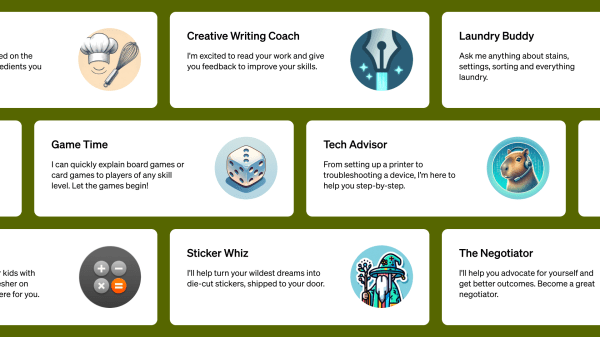
Hello, computational linguistic enthusiasts! Let’s explore a thrilling update from ChatGPT that’s making waves this month. Imagine being able to craft your own ChatGPT variant tailored for specific tasks, from guiding someone through a board game to providing math tutorials. Even more exciting, this innovation has the potential to transform corporate workflows. This user-friendly feature transcends the need for complex commands, allowing anyone to create a new ChatGPT with just a conversation or a set of instructions.

Empowering the Community in AI Development
This update marks a significant shift in AI development. By merging the community’s insights with OpenAI’s expertise, we’re seeing the birth of AI solutions that truly resonate with user needs. This collaborative approach is set to produce AI that is not only safer but also more in tune with what the community really wants and needs.

The Next Big Thing: The GPT Store
What’s on the horizon? OpenAI is gearing up to launch the GPT store, an innovative platform that will showcase GPTs developed by verified creators. This marketplace is a potential game-changer, offering a space where unique GPT creations can reach a global audience. Creators will have the opportunity to earn based on how frequently their GPTs are used. This initiative promises to inject a vibrant competitive edge into the AI landscape, encouraging a diverse range of talents to venture into AI development. We’re likely to witness an unprecedented surge in AI innovation, as more creators strive to make their mark in this evolving field.

In conclusion, we’re entering an era where AI becomes more personalized, approachable, and integrated into various aspects of our lives. Keep an eye out for more exhilarating developments in this dynamic field of AI!

Applications of Computational Linguistics

Hello everyone! Apologies for the gap in my posting schedule. Recently, I’ve been engrossed in schoolwork, but I’ve also delved into the potential applications of computational linguistics within my community.

While I’m currently honing my understanding of computational linguistics through platforms like Coursera, books, Kaggle, and through participation in my school’s AI club, I envision multiple applications as my proficiency grows.

Broad Ideas & Applications: As one progresses and develops a deeper grasp of computational linguistics, several impactful applications emerge.

  • Accessibility Tools: A future focus of mine will be on creating tools to aid populations such as the elderly. Voice assistants and text-to-speech or speech-to-text applications can immensely benefit those with hearing or visual challenges. Crafting such tools demands a deep grasp of computational linguistic techniques.
  • Healthcare Assistance: Collaborating with local hospitals, there’s potential to introduce AI-infused linguistic diagnostic or therapeutic tools. Beyond assisting medical professionals, such tools could offer crucial mental and emotional support in places lacking these resources. Bots like XiaoIce, for instance, serve as emotional anchors, providing solace to those in need.
  • Local Business Support: Veering slightly from pure computational linguistics but still harnessing AI is the concept of tools specifically designed for local businesses. This could manifest as systems that align local employers with suitable job seekers through an AI-facilitated matching process.

Beginner-Friendly Applications: For those just embarking on their computational linguistics journey, consider these simpler initiatives:

  • AI Literacy Programs: This would entail periodic community gatherings introducing AI and computational linguistics fundamentals. The program might also showcase an AI demonstration where participants can interact with chatbots or voice assistants, familiarizing themselves with their operations.
  • Homework Help Chatbots: Imagine a bot designed to answer basic student queries across subjects like English and math. While perfection isn’t the aim, it would be invaluable in steering students towards correct solutions.
  • Reading Assistance: Envision a bot equipped with text-to-speech capabilities, helping children, the elderly, or those with learning disabilities in their reading endeavors. Users could upload texts, which would then be read aloud. Advanced expertise in computational linguistics could morph this basic tool into a sophisticated aid.

It’s crucial to remember starting modestly allows for a progressive understanding of your community’s needs, enabling your initiatives to evolve in tandem. Consistent feedback is essential, ensuring services resonate with community priorities. In my locale, foundational support in education, commerce, and utilities garners much appreciation. However, for others, areas like language preservation could be of paramount importance.

Delving into AI Hallucinations: A Fascinating Article I Encountered at School

Hey everyone,

During my academic pursuits, I encountered an insightful article titled “Chatbots Sometimes Make Things Up” by Matt O’Brien. I found it to be of great significance and felt compelled to share its key takeaways with you.

The core of O’Brien’s article centers on the intriguing phenomenon of AI hallucinations. He delves deep into the challenges they present, citing various sources that shed light on their implications, especially for businesses that lean heavily on AI. Through expert opinions, the potential current and future challenges are brought to the forefront. Interestingly, the article doesn’t just highlight the pitfalls – it also explores the potential silver linings of AI hallucinations. However, the overarching message seems to be one of caution: while there’s hope for improvement, blind trust in AI-generated information might be premature.

Having digested O’Brien’s thoughts, I’ve formulated some of my own. To me, the pitfalls of hallucinations far outweigh their possible benefits. I was particularly struck by the mention of India’s hotel management institute which relies on AI for innovative ideas, making AI errors potentially costly. As AI continues to evolve and become an integral part of more sectors, the ramifications of such hallucinations could multiply. The article does touch upon the possible benefits of hallucinations in fields like marketing, but I’m skeptical. If unique perspectives generated by hallucinations are indeed valuable, I’d argue for a dedicated AI system for those niches rather than risking widespread misinformation. With the ever-growing role of AI, addressing these hallucination issues sooner rather than later seems paramount.

I encourage everyone to delve into this subject further, as the evolution and influence of AI in our daily lives is only set to increase. Your thoughts and opinions on this matter would be greatly appreciated.

My Sophomore Classes

High school has just kicked off, and I’m diving into my sophomore year with a total of eight classes on my schedule. While many of these courses are designed to meet my high school graduation requirements, a select few have been chosen to align with my specific interest in exploring linguistics and its intersection with technology.

AP World History:
Taking at least one history course per year is a graduation requirement at my high school. While world history may not seem directly relevant to computational linguistics, I opted for the more rigorous AP-level course for several compelling reasons. First, the class offers valuable cultural context, which is important when working with languages. This broader understanding can be particularly beneficial in the linguistics field, where social and cultural nuances often come into play. Additionally, AP World History sharpens critical thinking skills, which are essential in any academic discipline, including computational linguistics. The course also provides a sweeping view of global history that could offer unique insights into the evolution of languages.

AP Computer Science A:
At my school, we get to pick some electives, and this year I went for AP Computer Science A. The choice was a no-brainer since computer science is closely tied to computational linguistics. What I learn in this class can be applied directly to natural language processing and machine learning, both of which are key areas in the field of computational linguistics. My school also offers AP Computer Science Principles, but I chose the more advanced class because I already have some coding experience under my belt.

AP Calculus AB:
Navigating my high school’s math requirements, I opted for AP Calculus AB this year. While it’s a class I need to take to graduate, I have other reasons for choosing it too. Computational linguistics demands a good grasp of complex algorithms and mathematical models, and this calculus class can really help me get a handle on those. On top of that, it’s a great way to build up my analytical thinking skills, making it easier for me to get my head around the abstract theories and algorithms I’ll encounter in computational linguistics.

Spanish 3:
Even though I’ve already met my high school’s language requirement for graduation, I decided to take an additional year of Spanish. This choice aligns with my interest in computational linguistics, a field that often works with multiple languages. Improving my skills in both English and Spanish will provide me valuable insights into how languages are structured and processed, both by humans and computers.

English 10 Honors:
My high school offers only two English courses, and since an English class is required every year, I opted for the honors option. This choice extends beyond merely wanting to improve my grammar and English skills. A more rigorous English course will also benefit my understanding of computational linguistics. The class will delve into the structure and semantics of language, both of which are foundational elements in computational linguistics. Additionally, like other challenging classes, it will help me develop the analytical thinking skills needed to understand the complexities of computational linguistics.

Required Courses Unrelated to Computational Linguistics:
Chemistry – Meeting the required number of science credits is a must for high school graduation. Among the available courses, chemistry caught my interest the most, even though it doesn’t directly relate to computational linguistics.

Walking Wellness – Just like with science, I have to fulfill a certain number of fitness credits to graduate. Since Walking Wellness is a one-semester course, I thought it would be a good way to knock out this requirement and free up the second semester for another class to fulfill a different requirement.

Graphic Production and Design – For the second semester, I’ve enrolled in this course to meet my school’s art credit requirement for graduation. Given the one-semester options for art credits, this class seemed the most intriguing to me.

Current Reads: Diving into Multilingual NLP and Computers in Linguistics

To kick off my deep dive into the fascinating world of computational linguistics, I’ll be poring over an array of articles and books on the subject. These will serve as my primary guides on this educational journey. Join me as I unpack the key takeaways from the following two readings.

Jargon Busters: Multilingual NLP By Hugo Chamberlain


While navigating the field of computational linguistics, I stumbled upon an insightful article focused on multilingual NLP (Natural Language Processing). The article effectively simplifies the concept of multilingual NLP, and it even highlights a specialized system by a company named smartKYC. Put simply, multilingual NLP enables computer programs to understand not just the words in a document but also their underlying context or meaning.

The major advantage of multilingual NLP is its ability to quickly analyze large datasets, a task that would otherwise require a lot of manual work. This becomes increasingly important in our globally connected world, where information retrieval often has to span multiple languages. SmartKYC’s system shines in this regard, conducting comprehensive background checks no matter the language or geographic location. Financial institutions find this especially valuable as it allows them to capture all vital risk-related information.

Some Applications of Computers in Linguistics* By Victor H. Yngve

I recently discovered another compelling article that explores how computers are revolutionizing the field of linguistics. This piece delves deeply into how technology is not only refining traditional methods of linguistic study but also fostering entirely new approaches. Much like the previous article I discussed, this one emphasizes the efficiencies and accuracies that technology brings to linguistic research.

A primary focus of the article is the role of computers in file processing within linguistics. To break it down: computers are exceptionally adept at consistently updating and managing large sets of data, thereby simplifying the task for linguists. Additionally, the superior accuracy of computers and their advanced error-checking features are other noteworthy advantages.

The article doesn’t stop there; it also briefly explores other fascinating applications like text analysis and dialect surveying. Thus, it’s evident that the influence of computers extends beyond mere enhancements to existing methods; they are catalyzing groundbreaking advancements in our understanding of language.

Welcome to My Journey in Computational Linguistics!

Hello and welcome to the first post of my blog! If you’re as passionate as I am about the fascinating intersection of computation and language, you’ve come to the right place.

Purpose and Scope:

The primary aim of this blog is to document my explorative journey through the multifaceted world of computational linguistics. I will delve into its real-world applications—ranging from machine translation to sentiment analysis—as well as the societal and ethical considerations that come with it.

Posting Schedule:

To keep you updated and engaged, I’ll be publishing new content at least bi-weekly. Each post will offer insights, updates, or intriguing tidbits that I’ve discovered during my journey.

Join Me:

I’m incredibly excited to embark on this intellectual adventure, and I would be thrilled if you would join me. Whether you’re a student, a researcher, or simply someone curious about computational linguistics, there’s something here for everyone.

Blog at WordPress.com.

Up ↑