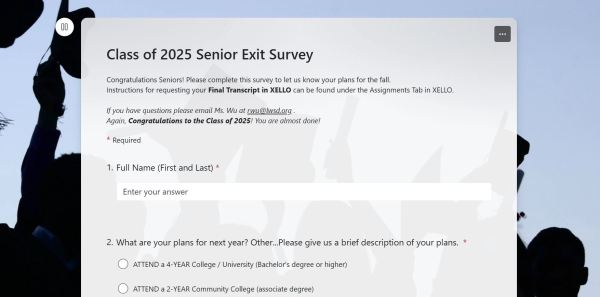
In late June 2025, I led my nonprofit organization, Student Echo, in a collaboration with Redmond High School to analyze responses from the Class of 2025 Senior Exit Survey. This annual survey, organized by the school’s College & Career Center, collects information on seniors’ post-graduation plans.
While the survey covers multiple areas, our focus was on one key free-response question:
“What additional support do you need before you graduate?”
The College & Career Center team had limited tools to process and interpret open-ended responses at scale. That’s where we came in. Using Student Echo’s AI tools, we analyzed the free-text answers and uncovered themes that could help the school offer more effective and timely support for graduating seniors.
Recommendations:
- Maintain a master checklist of graduation tasks.
- Schedule quick counselor check-ins with all seniors.
- Offer transcript and scholarship submission workshops.
- Watch for students who indicate confusion passively (“I think I’m good?”).
- Continue mental health messaging and support for burnout or senioritis.
These recommendations aim to make senior-year support more targeted, equitable, and proactive. We were especially excited to hear that the College & Career Center plans to share our findings with the Counseling Department Chair to explore ways to improve their processes based on our analysis.
The full report is available below.
— Andrew

 CompLing Insights