Platforms Under Scrutiny After Kirk’s Death
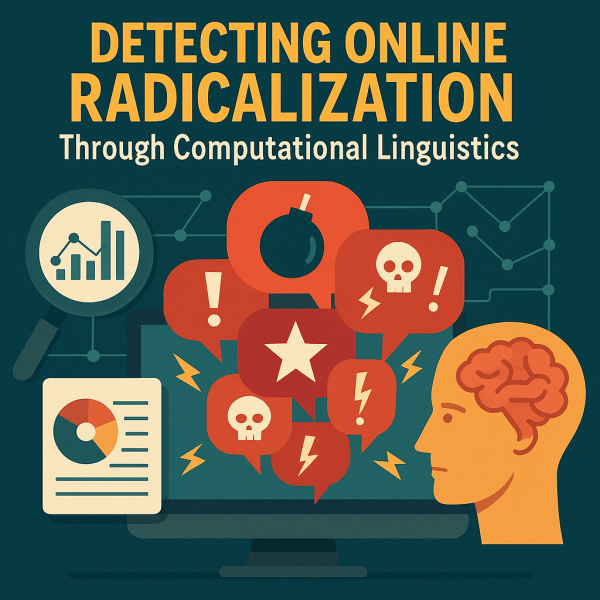
Recently the U.S. House Oversight Committee called the CEOs of Discord, Twitch, and Reddit to talk about online radicalization. This TechCrunch report shows how serious the problem has become, especially after tragedies like the death of Kirk which shocked many communities. Extremist groups are not just on hidden sites anymore. They are using the same platforms where students, gamers, and communities hang out every day. While lawmakers argue about what platforms should do, there is also a growing interest in using computational linguistics to find patterns in online language that could reveal radicalization before it turns dangerous.
How Computational Linguistics Can Detect Warning Signs
Computational linguistics is the science of studying how people use language and teaching computers to understand it. By looking at text, slang, and even emojis, these tools can spot changes in tone, topics, and connections between users. For example, sentiment analysis can show if conversations are becoming more aggressive, and topic modeling can uncover hidden themes in big groups of messages. If these methods had been applied earlier, they might have helped spot warning signs in the kind of online spaces connected to cases like Kirk’s. This kind of technology could help social media platforms recognize early signs of radical behavior while still protecting regular online conversations. In fact, I explored a related approach in my NAACL 2025 paper, “A Bag-of-Sounds Approach to Multimodal Hate Speech Detection”, which shows how combining text and audio features can potentially improve hate speech detection models.
Balancing Safety With Privacy
Using computational linguistics to prevent radicalization is promising but it also raises big questions. On one hand it could help save lives by catching warning signs early, like what might have been possible in Kirk’s case. On the other hand it could invade people’s privacy or unfairly label innocent conversations as dangerous. Striking the right balance between safety and privacy is hard. Platforms, researchers, and lawmakers need to work together to make sure these tools are used fairly and transparently so they actually protect communities instead of harming them.
Moving Forward Responsibly
Online radicalization is a real threat that can touch ordinary communities and people like Kirk. The hearings with Discord, Twitch, and Reddit show how much attention this issue is now getting. Computational linguistics gives us a way to see patterns in language that people might miss, offering a chance to prevent harm before it happens. But this technology only works if it is built and used responsibly, with clear limits and oversight. By combining smart tools with human judgment and community awareness, we can make online spaces safer while still keeping them open for free and fair conversation.
Further Reading
- Talat, Zeerak; Schlichtkrull, Michael Sejr; Madhyasta, Pranava; de Kock, Christine. Pathways to Radicalisation: On Radicalisation Research in Natural Language Processing and Machine Learning. WOAH 2025. This position paper provides a roadmap for how NLP and ML can help with detecting radicalisation. It also discusses challenges in datasets, temporal shifts, and multi-modality.
- ArAIEval Shared Task. Propagandistic Techniques Detection in Unimodal and Multimodal Arabic Content. ArabicNLP and ACL-affiliated, 2024. This shared task involves detecting propaganda and persuasion in both text and images or memes. It is relevant because radicalization often uses persuasive or propaganda-style messaging.
- Nouh, Mariam; Nurse, Jason R. C.; Goldsmith, Michael. Understanding the Radical Mind: Identifying Signals to Detect Extremist Content on Twitter. (2019). This paper looks at textual, psychological, and behavioral features that can help distinguish radical or extremist content.
- Chen, Celia; Beland, Scotty; Burghardt, Ingo; Byczek, Jill; Conway, William J.; et al. Cross-Platform Violence Detection on Social Media: A Dataset and Analysis. WebSci 2025. This paper introduces a large dataset of violent and extremist content across multiple platforms and analyzes how models trained on one platform generalize to another. This is especially important for understanding radicalization patterns that transcend individual platforms.
— Andrew
5,280 hits
 CompLing Insights